
Maui County VINELink Coverage
Hawaiʻi’s VINE service is branded Hawaiʻi SAVIN, the Statewide Automated Victim Information and Notification service. The Department of Corrections and Rehabilitation directs the public to it for custody and parole information. That makes it relevant to Maui Community Correctional Center, DCR state prisons, and HPA parole status. Registration and access are free, anonymous, and confidential.
Coverage follows the agency, not just the county. A Maui defendant serving a felony term can be held on Oʻahu or at Saguaro in Arizona and still remain under Hawaiʻi DCR. By contrast, a person in federal BOP custody, ICE detention, police-only holding, or a court-only matter may require another source. The public service is not a permanent historical DCR profile and does not promise a full sentence record or release checklist.
Search One Maui County Inmate
Begin with the exact legal name and a known identifier when available. Broad guesses increase the risk of choosing the wrong person. When several results appear, compare the neutral identity and agency details shown by the live interface before opening a record.
- Start at the official Hawaiʻi SAVIN page and follow its link to VINELink.
- Select Hawaiʻi and choose the offender or custody search offered by the current interface.
- Enter the full legal name or known ID. Try only carefully verified name variants if the first search fails.
- Compare identifiers and the reporting agency. Do not rely on name alone.
- Open the matched record and copy its literal custody or parole status, location when supplied, and the time checked.
The Maui County released inmate search maps the next source when VINELink is silent or the custody system is unclear. MCCC or MISC can resolve a recent local departure, and the court docket can explain the legal event.
The live VINELink search shown in the captured interface is the person-specific entry point.
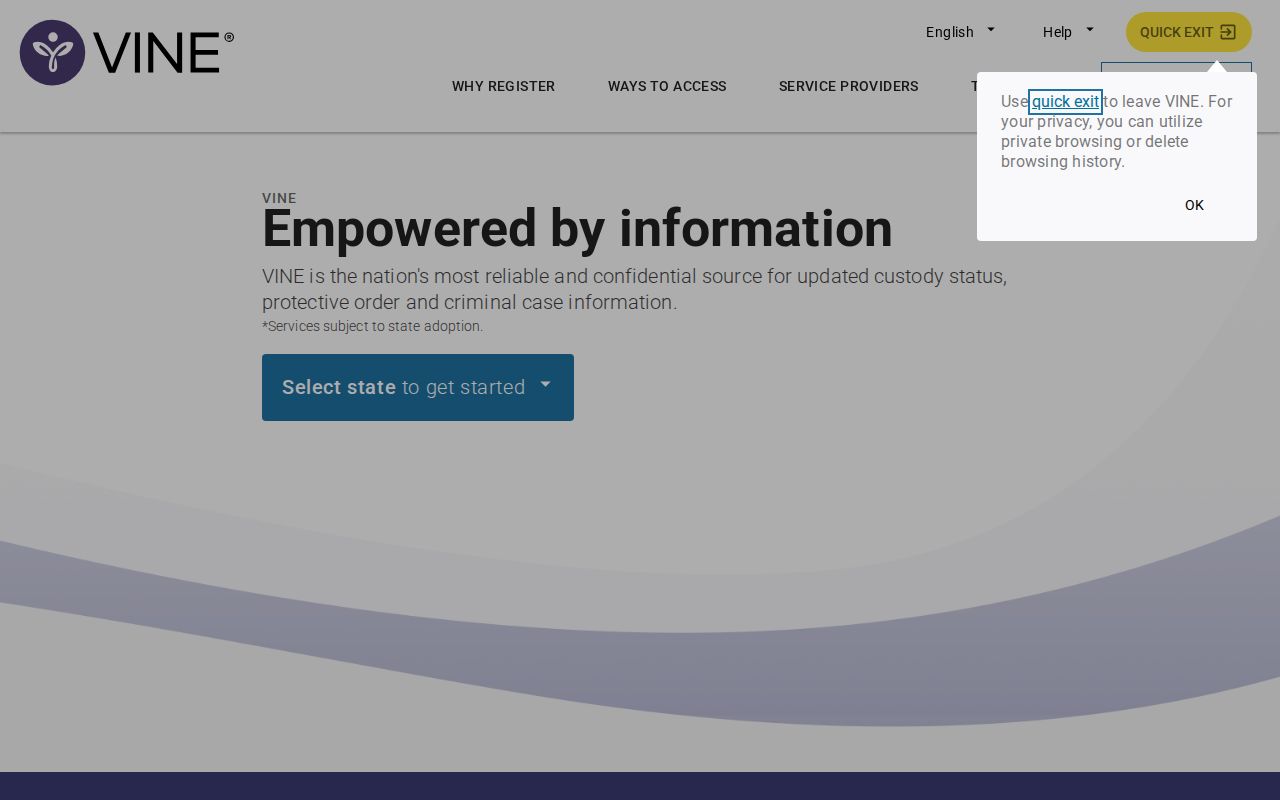
The interface may change, so follow its present labels rather than relying on an old screenshot or field name.
Maui VINELink Release Fields
DCR verifies that SAVIN provides custody and parole status. Exact fields depend on the reporting feed and current interface. Do not promise a photograph, release reason, sentence computation, supervision office, or lasting historical record unless the live Hawaiʻi result actually displays it.
| Field or function | How to interpret it |
|---|---|
| Jurisdiction | Confirms the search is under Hawaiʻi rather than another state. |
| Name or identifier | Helps distinguish the intended person when checked with other shown details. |
| Custody or parole status | Reports the literal status supplied through the participating agency. |
| Agency or location | May identify the reporting authority or facility, when the feed supplies it. |
| Notification registration | Allows monitoring of the selected record through available channels. |
| Date or alert time | Must be labeled exactly; it is not automatically the completed release timestamp. |
Hawaiʻi SAVIN has no verified public projected-release-date field. A minimum-term date, hearing date, tentative planning date, maximum expiration, and actual release time answer different questions. For authoritative sentence computation, contact DCR’s Offender Management Office and request the relevant record.
Register Maui County Release Alerts
Registration begins from the matched person’s record. Available channels can include phone, text, email, or app notice. DCR also lists telephone and TTY access. Follow the options shown by the current interface because methods and labels can change.
- Open the verified person’s record and choose notification or registration.
- Select each available contact method that fits the need.
- Enter and confirm the requested phone number, email, or app information.
- Complete any PIN, verification, or confirmation prompt. Keep the PIN private.
- Save the registration details and update them if contact information changes.
VINELink is also available by phone at 1-877-846-3444 and by TTY at 1-866-847-1298. Hawaiʻi SAVIN’s office number is 808-587-1356. DCR says the person being monitored is not told who registered.
Note: A registration monitors the selected person; it does not create a browsable Maui 24-hour or 72-hour release list.
Confirm Maui VINELink Results
DCR warns users not to depend solely on SAVIN. A release alert establishes that the reporting status changed, but the DCR release checklist carries the category needed to distinguish bail, bond, dismissal, parole, probation, time served, transfer, extradition, deportation, hospital release, or discharge. Preserve the alert and timestamp, then compare the responsible record.
For a recent MCCC episode, call MCCC at 808-243-5101 or MISC at 808-243-5008. Search the Hawaiʻi Judiciary records gateway for the legal order. A judge’s order authorizes action, while DCR’s executed record proves the facility completed it after checking identity, documents, pending matters, and holds.
For parole, HPA is the authority on its decision and supervision status. Approval may depend on a plan or other condition, so it does not always equal immediate departure. Actual release should align with the DCR record or status update. If personal safety is involved, use the proper advocate, agency, or emergency service instead of relying on an automated notice.
Maui Releases Outside VINELink
VINELink does not cover federal BOP custody. The BOP Inmate Locator can return a historical federal release date or wording such as released or not in BOP custody. That still does not rule out U.S. Marshals, state, immigration, or community supervision.
ICE’s online locator is designed for current immigration detention, not a complete historical release file. A no-result can mean release, transfer, identity differences, another agency, or a person outside searchable coverage. Police holding and court-only events also may never appear in SAVIN. Follow the agency that actually held the person.
| Custody path | Primary check |
|---|---|
| MCCC or Hawaiʻi state prison | Hawaiʻi SAVIN, DCR, and HPA when parole applies |
| Federal sentence | BOP locator and federal docket |
| Immigration detention | ICE ODLS and the responsible agency |
| Maui court event | eCourt plus the facility record that executed the order |
Hawaiʻi SAVIN’s Maui Layer
Hawaiʻi’s distinctive local layer joins web search with phone, app, TTY, and live-operator access. It also includes parole status under DCR, which is valuable for a Maui-linked person who served time away from the island. Custody site, sentencing county, and parole destination can differ.
DCR supplies Maui victim-resource contacts through its SAVIN program. The notification service supports victims and concerned citizens, yet registration is not a court order or safety plan. It should complement direct agency contact when a status change has urgent consequences.
The official SAVIN description and contact page documents those access channels.
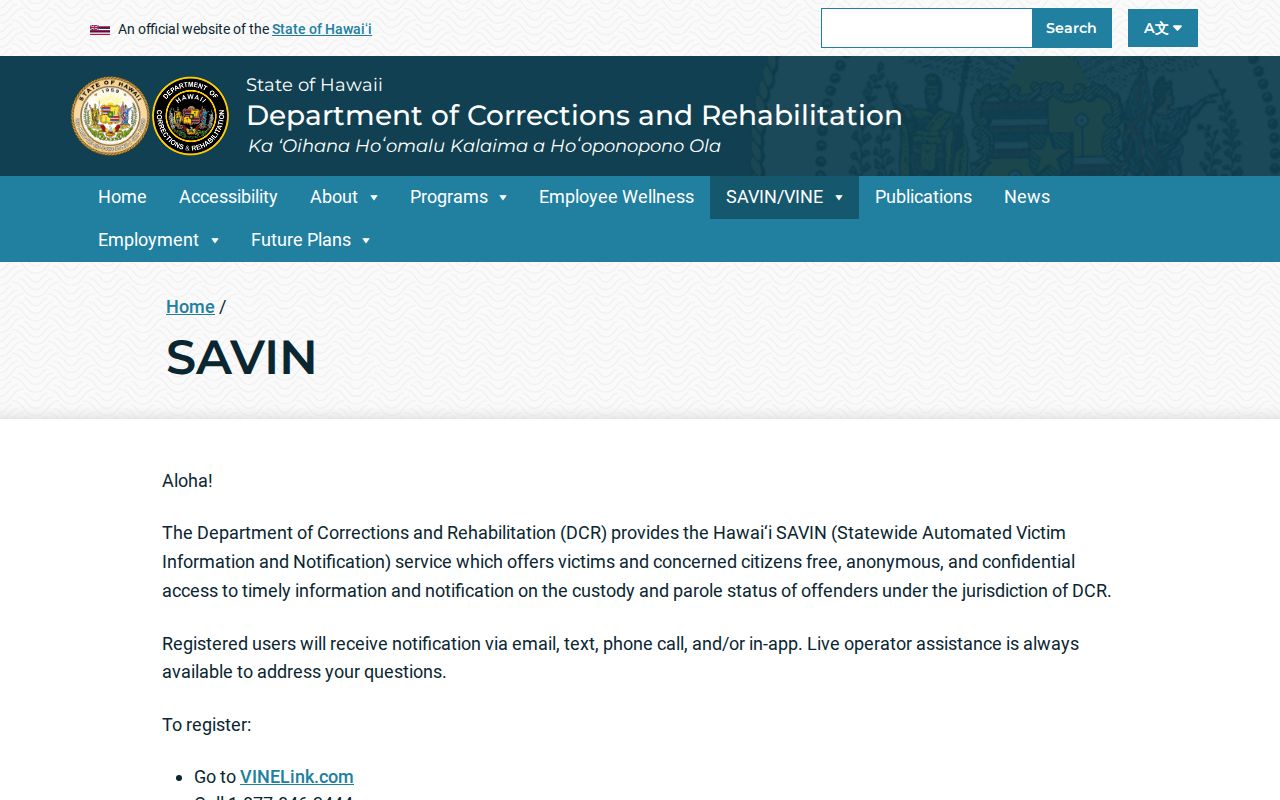
The state page confirms the program’s role and contact routes, while VINELink remains the live search and registration interface.
No Maui VINELink Match
A no-match result is a starting point, not a conclusion. Check exact spelling and known identifiers. Then ask whether the event was police-only, too old for the current display, entered under a variant, federal, immigration-related, sealed, expunged, or outside DCR coverage.
If the person was recently at MCCC, contact MCCC or MISC and ask whether the person remains there, entered the community, or transferred. For an older event, submit a narrow UIPA request for DCR 8219, the actual release date and time, release type, releasing facility, and final custody-status entry. Ask for redaction of exempt data rather than unnecessary private details.
Note: Verify identity with case or DCR identifiers before treating a status as belonging to the intended person. Record the query time, spelling, jurisdiction, and agency shown.
Read Maui Release Alerts Carefully
A SAVIN alert is a public-facing derivative of an agency status change. It is valuable evidence, but the executed DCR record is stronger for the physical fact and type of release. Save the message, method, timestamp, person identifier, and exact wording. Do not shorten a transfer or parole notice to “fully released.”
When a court order and alert differ in time, they may describe normal stages. The judge can authorize release before DCR receives and executes the order. Offendertrak is then updated, and SAVIN notification follows the reporting flow. If two records truly assign different times to the same completed event, ask MCCC, MISC, or DCR’s record unit to reconcile them in writing.
Maui Parole Status on SAVIN
Parole means release from confinement under HPA’s continuing custody, control, supervision, and conditions. It is not the same as final discharge. SAVIN may show parole status, while HPA is the primary authority for the decision and whether supervision later ended.
A person sentenced in Maui may have served on Oʻahu or in Arizona and may be supervised in another county or state under an approved arrangement. A prior Maui address does not prove that the Maui Parole Section currently handles the case. Contact HPA at 808-587-1300 for routing. There is no verified public name-based HPA supervisee directory.
HPA approval and actual release can occur at different times. A plan, placement, travel arrangement, or other condition may remain unresolved after approval. Compare the HPA result with DCR or SAVIN evidence of actual departure before calling the person released on parole.
Request Maui Release Proof
VINELink is not a certified historical release ledger. For durable proof, ask DCR for the releasable portions of DCR 8219, the actual release date and time, release type, releasing facility, supporting document type, and final Offendertrak entry. A parole inquiry can also request the HPA decision and actual parole-release or final-discharge date. Preserve the agency response and exact record label so a later status check can be compared with the same event.
Use Hawaiʻi’s UIPA process and identify the person, approximate custody dates, and record types without adding needless sensitive facts. Ask for electronic copies and redaction of exempt information. If the status concerns the requester’s own inaccurate DCR record, HRS chapter 92F provides a correction and amendment path.